exploit-protection-policy

May 22, 2024 · 1 min read
project

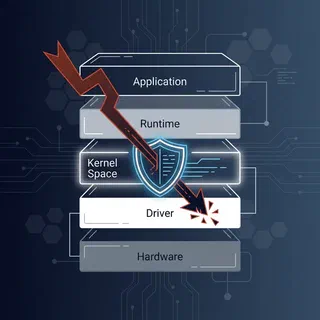
Exploit-Protection-policy provides a production-hardened Exploit Protection (EP) policy tailored for Windows 10 and Windows 11 systems. It combines multiple industry-standard security baselines with advanced restrictions to maximize security without breaking compatibility with everyday applications.

This policy has been tested in air-gapped systems to protect endpoints from advanced threat vectors while maintaining productivity.

Merged Security Baselines

  • DISA STIG Exploit Protection v3.
  • Microsoft Security Baseline Exploit Protection policy (specifically aligned for enterprise systems).
  • milgradesec’s custom Exploit Protection rule configurations.

Key Protections Enforced

  • System-Wide Mitigations: Enforces fundamental protections such as Control Flow Guard (CFG), Data Execution Prevention (DEP), Address Space Layout Randomization (ASLR), and Heap Protection by default.
  • Advanced Payload Controls: Restricts execution vectors using Export Address Filtering (EAF/EAF+), Import Address Filtering (IAF), and Return-Oriented Programming (ROP) mitigations.
  • Image & Code Integrity Restrictions: Blocks loading of low-integrity or remote images, preventing malicious library injection.
  • Application-Specific Tuning: Includes pre-configured exceptions and application rules to balance high-security containment with software compatibility.
Florian Stosse
Authors
Cybersecurity engineer

About Me

Hi, I’m Florian Stosse, just another information security engineer !

Current work

I currently work at the European Space Agency, as a cybersecurity engineer for the Galileo programme, specifically for the Galileo Mission Segment (GMS).

Experience summary

I previously worked at Safran Data Systems, in the Space & Communications business unit. I focused on hardening and securing our embedded Windows 7 and 10/11 platforms (Cortex family of TT&C and high data rate receivers), among other cool things :)

Before that, in October 2018, I started a PhD thesis at CEA-List and ANSSI to work on formal methods applied to software security. More specifically, I was working on software defenses and hardening against hardware vulnerabilities, such as Spectre and Meltdown, using sound static analysis tools (Frama-C in particular).

My thesis was under the supervision of Julien Signoles (CEA), and my advisors were Patricia Mouy (ANSSI) and Florent Kirchner (CEA).

Unfortunately, we had to put a stop to the thesis, but hey, that’s life !

Education summary

I graduated with a M.Sc in Computer Science (major in cybersecurity, minor in embedded systems) from ESIEA Paris (a top French engineering school, part of the “Grandes écoles”) in August 2018. During my graduate studies, I was an apprentice at Bureau Veritas’ R&D center in La Défense, Paris.

I worked in the RAMS department, and my main areas of work were:

  • software security (e.g. static analysis, SDLC),
  • connected/autonomous vehicles security (e.g. ISO 21434 for automotive security engineering),
  • and industrial systems security (e.g. ISO 62443 certification).

Do not hesitate to get in touch if you want to chat about these topics (or anything else, really) !