openstreetmap-tile-server

May 23, 2024 · 1 min read
project

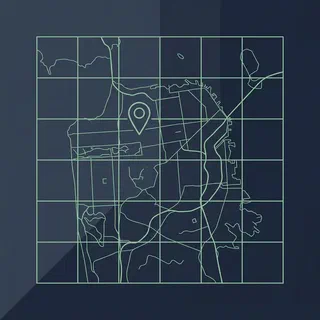
openstreetmap-tile-server is a deployment configuration and guide for hosting a local, offline OpenStreetMap (OSM) tile server. Designed specifically for high-security, air-gapped, or isolated network environments, it enables applications to render mapping data without requesting external web resources.

This stack leverages Docker to simplify deployment, package ingestion, and render pipeline orchestration.

Stack Components

  • Database: PostgreSQL with PostGIS extensions to manage geographical data.
  • Ingestion: Osm2pgsql for importing and styling .osm.pbf map files.
  • Renderer: Mapnik and renderd for rendering vector map data into raster tiles.
  • Tile Server: Apache with mod_tile to serve pre-rendered or on-the-fly map tiles.
  • Front-End Integration: Simple Leaflet-based templates for verifying local tile rendering.

Usage Outline

Pre-render tiles or import specific geographical datasets (e.g., country extracts from Geofabrik) to serve them locally within your network. Useful for command-and-control centers, localized flight-tracking platforms, and telemetry dashboards operating in secure perimeters.

Florian Stosse
Authors
Cybersecurity engineer

About Me

Hi, I’m Florian Stosse, just another information security engineer !

Current work

I currently work at the European Space Agency, as a cybersecurity engineer for the Galileo programme, specifically for the Galileo Mission Segment (GMS).

Experience summary

I previously worked at Safran Data Systems, in the Space & Communications business unit. I focused on hardening and securing our embedded Windows 7 and 10/11 platforms (Cortex family of TT&C and high data rate receivers), among other cool things :)

Before that, in October 2018, I started a PhD thesis at CEA-List and ANSSI to work on formal methods applied to software security. More specifically, I was working on software defenses and hardening against hardware vulnerabilities, such as Spectre and Meltdown, using sound static analysis tools (Frama-C in particular).

My thesis was under the supervision of Julien Signoles (CEA), and my advisors were Patricia Mouy (ANSSI) and Florent Kirchner (CEA).

Unfortunately, we had to put a stop to the thesis, but hey, that’s life !

Education summary

I graduated with a M.Sc in Computer Science (major in cybersecurity, minor in embedded systems) from ESIEA Paris (a top French engineering school, part of the “Grandes écoles”) in August 2018. During my graduate studies, I was an apprentice at Bureau Veritas’ R&D center in La Défense, Paris.

I worked in the RAMS department, and my main areas of work were:

  • software security (e.g. static analysis, SDLC),
  • connected/autonomous vehicles security (e.g. ISO 21434 for automotive security engineering),
  • and industrial systems security (e.g. ISO 62443 certification).

Do not hesitate to get in touch if you want to chat about these topics (or anything else, really) !